Home › Blog › Carrom Powder Alternatives at Home: Talc, Boric & More
Carrom Powder Alternatives at Home: Talc, Boric & More
Last updated: September 23, 2026
A practical guide to safe household substitutes for carrom powder, how to apply them without ruining a game, and how to tell when a slow board actually needs cleaning instead.
Published · Updated
Quick answer
The best carrom powder alternatives at home are boric powder in another form, plain unscented talcum powder, or finely crushed chalk dust in a pinch — all three cut friction so coins glide instead of drag. None is a perfect match, but any beats a sticky board.
Key takeaways
- Boric powder, plain talcum, and fine chalk dust are the best carrom powder alternatives at home.
- Avoid flour, cornstarch, oily, or scented powders — they clump and leave residue.
- Apply a thin, even layer and spread it instead of leaving piles.
- A board slow right after cleaning needs powder; gradual slowdown usually needs a clean.
- Wipe the striker and coins too — grime there can mimic a powder problem.
The best carrom powder alternatives at home are boric powder in another form, plain unscented talcum powder, or — in a real pinch — finely crushed chalk dust, since all three cut friction the same way real carrom powder does. None of them is a perfect match, but any one beats playing on a sticky board.
Why does carrom powder matter so much in the first place?
Carrom powder is the thin, dry layer between the coins and the board surface that lets a clean strike travel in a straight line instead of catching and dragging. Without it, even a freshly cleaned board can feel slow, and a slow board makes every shot harder to judge — you end up flicking harder than you should, which throws off control on top of everything else.
This is also why running out mid-session is so annoying. A board that felt fast an hour ago can suddenly feel like the coins are wading through syrup, and that's a friction problem, not a technique problem. If you keep missing shots that should have landed, check the surface before you blame your aim — the aiming fundamentals only matter once the board itself is behaving.
What actually works as a carrom powder substitute?
A few household options come close enough to get you through a game, and the goal with any homemade carrom powder is the same: a very fine, dry powder that spreads thin and doesn't clump.
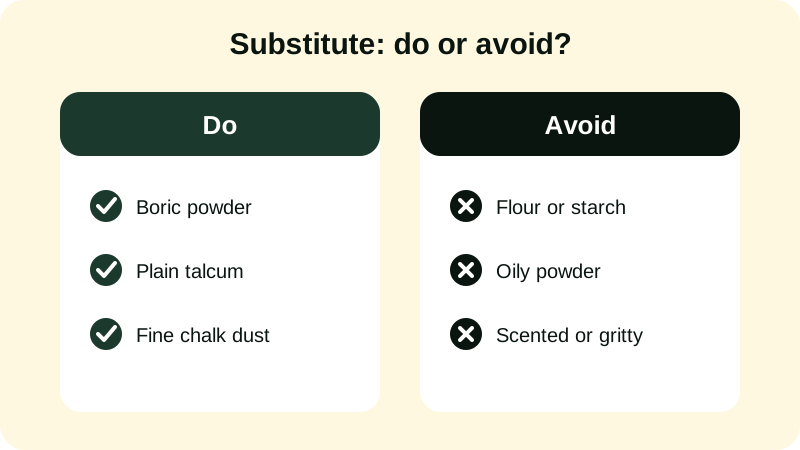
- Boric powder — if you have it around for other reasons, this is close to what many players already use and gives a smooth, consistent glide.
- Plain talcum powder — widely available and fine enough to spread evenly. It's the most common talcum powder for carrom board fixes people reach for, but go light, since a heavy layer turns slippery rather than fast.
- Fine chalk dust — works in a pinch if you crush it down finely enough, though it's harder to spread evenly than talcum.
What to avoid entirely
Flour, cornstarch, and other kitchen powders are the most common bad idea, because they clump under humidity, leave residue that's genuinely annoying to clean off, and settle unevenly across the board. That unevenness is the real problem — patches where a coin glides fine sit right next to patches where it drags, which is worse for your game than a uniformly slow board.
How do you apply a substitute powder properly?
Less is more here, and that's true of real carrom powder too — the fastest route to a reliable carrom powder substitute is a thin, even coat, not a generous one.
- Sprinkle a thin, even layer across the whole surface.
- Spread it with a soft cloth or your palm instead of leaving it in piles.
- Pay extra attention near the corners, since that's where most shots are headed.
- Test with a couple of flicks before playing for real.
Piles create dead spots where a coin can catch instead of glide, and uneven coverage near the pockets shows up as a coin that dies just short of a corner it should have reached. For a refresher on why corner accuracy matters so much, the basic setup and rules guide covers the mechanics of aiming toward the four corner pockets.
When is the problem powder, and when is it actually the board?
This is worth figuring out before you go hunting for a carrom board too slow fix at all, because the cause isn't always a missing layer of powder.
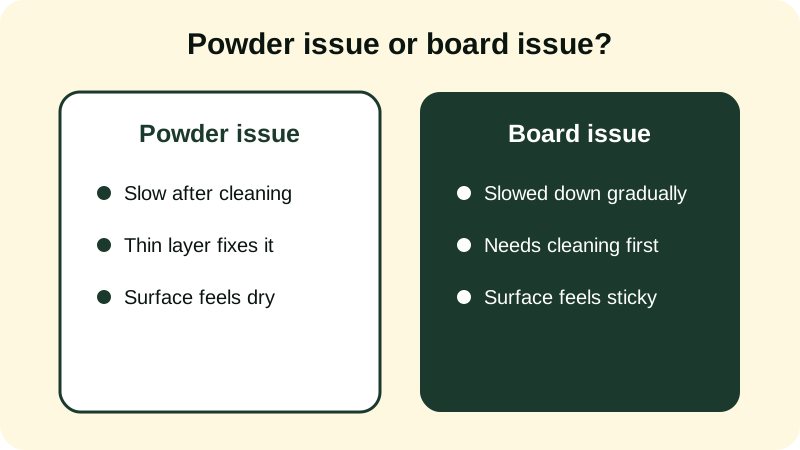
If coins have been slowing down gradually over several sessions, that's usually dust and finger-oil buildup, not a missing layer of powder — a proper clean often fixes it without adding anything at all. If the board is freshly cleaned and still feels sticky or slow, that's when powder is actually the missing piece.
| Symptom | Likely cause | Fix |
|---|---|---|
| Gradual slowdown over weeks | Dust and oil buildup | Clean the surface first |
| Slow even right after cleaning | Genuine lack of powder | Apply a thin, even layer |
| Fast in some spots, slow in others | Uneven powder or residue | Wipe clean and reapply evenly |
The board maintenance guide goes through the cleaning side in more depth, including how often to wipe the surface down and what actually causes a board to warp or slow over time. For more on what makes a board fast once it's clean, see how carrom boards get so slippery.
Does the striker and coins matter as much as the powder does?
Yes — it's easy to blame a slow board when the real culprit is a grimy striker or a rough-edged coin. A striker that's picked up finger oil over a long session grips the surface unevenly no matter how well you've powdered it, and a chipped coin edge can throw off contact in a way that looks like a bad shot but isn't.
Wipe both down with a soft, dry cloth as part of the same routine — it's a small habit that makes a bigger difference than most players expect. If you're setting the board up fresh for a session, it's worth double-checking your coin arrangement too, since a board that plays fast but is set up wrong just means faster mistakes.
None of this needs to be complicated: keep the surface clean, use a light hand with whatever powder or substitute you've got, and check the striker and coins along with the board itself. Carrom, a mobile carrom game being built with realistic physics, isn't released yet — get notified when it launches if you'd like a phone version to practice on once it's out, and the rest of the blog covers setup and technique in more depth.
Frequently asked questions
What can I use instead of carrom powder?
Boric powder in another form, plain unscented talcum powder, or finely crushed chalk dust all work as carrom powder alternatives at home, since each cuts friction so coins glide instead of drag. None matches real carrom powder exactly, but any of them beats a sticky board for one session.
Can I use flour or cornstarch as carrom powder?
No — kitchen powders like flour and cornstarch clump under humidity, leave residue that's hard to clean off, and settle unevenly across the surface. That unevenness creates patches where coins glide fine right next to patches where they drag, which hurts your game more than a uniformly slow board would.
How much substitute powder should I use?
Less than you'd think. Sprinkle a thin, even layer, spread it with a soft cloth or your palm, and test it with a couple of flicks before playing. Too much makes the coin slide loosely out of control; too little still drags noticeably partway across the board.
Why does my board feel slow even after I add powder?
If the board was already dirty, powder only masks the grime for a short while. Clean the surface first to remove dust and finger oil, then apply a thin layer of powder or substitute — adding powder on top of grime rarely solves a genuinely sticky board.
Does the striker need powder too?
No — powder goes on the board surface, not the striker. But a grimy striker grips unevenly no matter how well the board is powdered, so wipe it down with a soft, dry cloth as part of the same cleaning routine.