Home › Blog › Common Carrom Mistakes to Avoid (And How to Fix Them)
Common Carrom Mistakes to Avoid (And How to Fix Them)
Last updated: October 14, 2026
A practical rundown of the striker, queen, setup, and board-care mistakes that quietly lose carrom games, with fixes for each.
Published · Updated
Quick answer
The biggest common carrom mistakes to avoid are pushing instead of snapping the striker, rushing the queen without a cover shot ready, careless coin setup, and letting the board or coins go uncleaned. Fixing these four habits solves most of what feels like bad luck.
Key takeaways
- Snap the striker with a relaxed flick — don't push or jab downward.
- Don't pocket the queen without a cover shot ready on your next turn.
- A careless coin setup creates bad angles before the first shot is even played.
- A total miss still costs your turn — it's not a safe pass.
- Dust, worn coin edges, and a dirty striker cause most 'mystery' misses.
The common carrom mistakes to avoid aren't exotic — they're the same handful of habits showing up in almost every lost game: a pushed striker instead of a snapped one, a rushed queen with no cover ready, a sloppy coin setup, and a board that's gone one session too long without cleaning. Fix those four, and a surprising number of close losses turn into wins.
What's the single biggest mistake with striker technique?
Pushing the striker instead of snapping it. A push shot — where you lean into the striker and shove it forward — loses both power and accuracy compared with a quick, relaxed flick of the finger or thumb. It feels more controlled in the moment, which is exactly why so many players default to it, but it actually costs consistency instead of adding it.
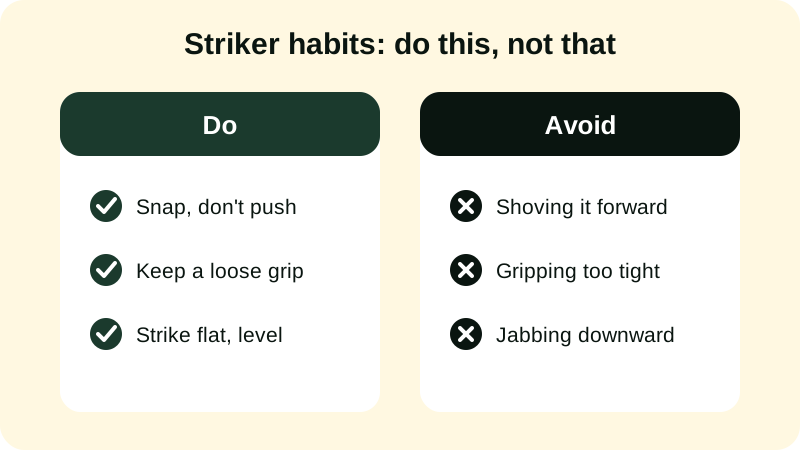
The second most common technique error is jabbing down into the board instead of keeping the flick flat and level. A downward strike can cause the striker to hop, which throws off contact with the coin and sometimes sends the striker off the playing surface entirely — a foul in most setups, and one that costs you anything you pocketed on that shot too. If you want to drill the difference between a push and a proper snap, working through thumb shot technique step by step is the fastest way to feel it in your hand instead of just reading about it.
Why does rushing the queen backfire so often?
Because pocketing the queen early, before you have a reliable cover shot ready on your very next turn, usually means losing it straight back to the board. It's one of the most common carrom mistakes to avoid precisely because it feels like progress in the moment, but it rarely holds up.
Going for the queen the instant it's open, with no clean coin nearby to cover it, is one of the single most common turn-wasting mistakes in the whole game. Learn exactly what covering the queen means before you take the shot, not after.
Stronger players tend to let the queen sit for a while, especially early in a game when the board is still crowded and a clean follow-up shot is hard to line up. As the board opens up later, the cover shot gets easier, and the whole exchange becomes far less risky. Patience here is a skill, not a weakness — treat the queen as a late-game target rather than a first-chance grab.
What setup and turn mistakes trip up beginners?
A messy or uneven coin pile at the start of a game changes which shots are actually open before anyone has flicked the striker once. If coins aren't arranged carefully, you can end up with awkward early angles that have nothing to do with anyone's skill — just a bad setup.
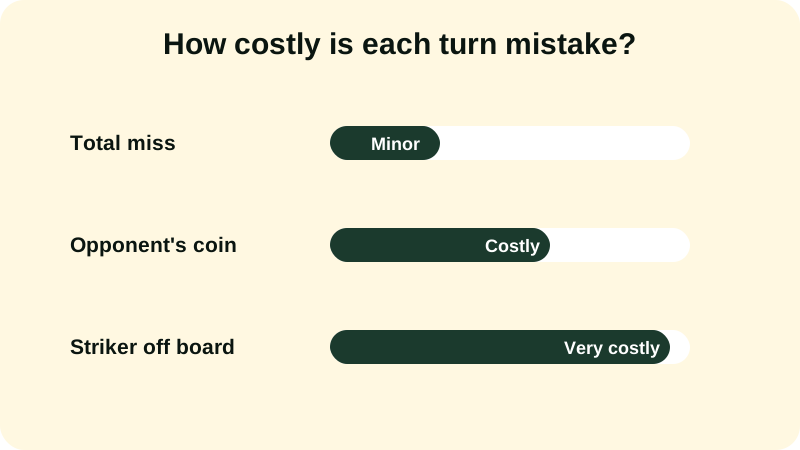
Turn mistakes compound the problem. A lot of players treat a total miss as a "safe" pass rather than what it actually is — a full turn change, same as fouling. Playing an overly cautious tap because you're afraid of missing often wastes the turn just as badly as forcing a bad angle would have. If you're unsure how turns, fouls, and the queen interact, a quick refresher on the basic rules clears up most of this in a few minutes.
Getting the starting arrangement right matters just as much — a proper coin placement diagram removes the guesswork entirely. Small setup errors like this are easy to miss because they don't feel like mistakes — they feel like bad luck. Aiming mistakes usually trace back to one habit: picking a target on the coin instead of picking the exact point of contact needed to send it toward the pocket. Working on your sighting line fixes more "bad luck" misses than most players expect.
How does board and coin neglect cause "mystery" misses?
A shot that looked perfectly lined up but died halfway there, or drifted off-line for no obvious reason, is almost always a surface problem rather than a technique problem. Dust, finger oil, and worn coin edges all quietly change how a shot behaves, and it's easy to blame your aim instead of the board. Even a well-aimed shot can wobble or stall if the surface itself is inconsistent from one corner to the next.
Run a finger along the edge of any coin that gets dropped a lot — a rough or chipped edge throws off contact in a way that looks exactly like a missed shot. Wipe the striker too; it touches every single flick you make.
Letting the board go too long between cleanings is one of the quieter common carrom mistakes to avoid, because it doesn't feel like a mistake at all — it feels like the game just got harder. A board that's slowed down from built-up grime makes every shot require more force to compensate, which throws off touch shots especially. A quick wipe after every session prevents most of this buildup before it ever becomes noticeable. A simple board maintenance routine solves this long before it becomes a pattern, and if the surface feels permanently sluggish rather than just dusty, a few powder alternatives are worth trying.
None of these fixes require rebuilding your whole game — they're small corrections to habits most players never think to question. Clean up the technique, the pacing on the queen, the setup, and the surface, and a surprising number of "unlucky" games turn into wins instead. Carrom, a mobile carrom game being built with real physics and no pay-to-win in online multiplayer, isn't released yet — get notified when it launches if you'd like a phone version to drill the snap and the sighting line between real sessions. For more technique breakdowns, browse the blog.
Frequently asked questions
What is the most common carrom mistake beginners make?
Pushing the striker instead of snapping it. A push feels controlled but loses power and accuracy compared to a quick, relaxed flick of the finger or thumb. A flat, level snap with a loose grip almost always outperforms a shove, especially on longer shots.
Why shouldn't you rush to pocket the queen?
Because pocketing the queen without a cover shot ready on your next turn usually means losing it straight back to the board. It feels like progress in the moment, but experienced players wait until the board opens up and a clean cover shot is easier to line up.
Does missing every coin count as a safe turn in carrom?
No. A complete miss ends your turn exactly like a foul or pocketing an opponent's coin does. Treating a miss as harmless, or playing an overly cautious tap out of fear of missing, wastes the turn just as badly as forcing a risky angle would.
How does a dirty carrom board cause missed shots?
Dust, finger oil, and chipped coin edges change how a shot behaves in ways that look exactly like bad aim. A shot that dies halfway or drifts off-line is usually a surface problem, not a technique problem, and a quick wipe-down after each session prevents most of it.