Home › Blog › How to Aim Accurately in Carrom
How to Aim Accurately in Carrom
Last updated: October 11, 2026
Accurate carrom aiming comes down to building a repeatable sighting line between striker, coin, and pocket, protecting it with a steady grip and a clean board, and drilling it with short, repetitive practice.
Published · Updated
Quick answer
How to aim accurately in carrom starts with lining up three points — your striker, the exact spot on the target coin, and the pocket — into one straight sighting line, then committing to it with a single smooth flick instead of a hesitant jab.
Key takeaways
- Line up striker, coin, and pocket on one straight sighting line before every shot.
- Check the line from eye level, then flick through it in one smooth motion.
- Build accuracy on straight shots first, then add angles and rebounds in that order.
- A dragging or uneven board surface can bend a shot that was aimed correctly.
- Short daily drills on one coin teach you more than full matches do.
How to aim accurately in carrom comes down to one habit: finding a clean sighting line between your striker, the coin you want, and the pocket you're sending it to, before you ever touch the board.
What's actually happening when you line up a shot?
Every carrom shot is really three points you're trying to put on one straight line: where your striker sits, the exact spot on the target coin, and the pocket you're aiming for. Miss that line by even a little and the coin drifts past the pocket instead of into it — that's carrom aiming technique, stripped down to one sentence.
Straight shots give you the most margin for error, which is exactly why they're the right place to build your sighting-line instinct first. Angled shots ask you to imagine where the coin travels after contact, not just where the striker is pointing, and rebound shots off the side rail ask you to trust a mirrored line you can't fully see until you've drilled it. None of this is harder than it looks once the basic sighting line is automatic — how to play carrom covers the setup every one of these shots starts from.
How do you line up a shot, step by step?
Treat the line-up as a routine, not a guess — the same handful of steps, every single time, whether it's an easy pot or a tense rebound.
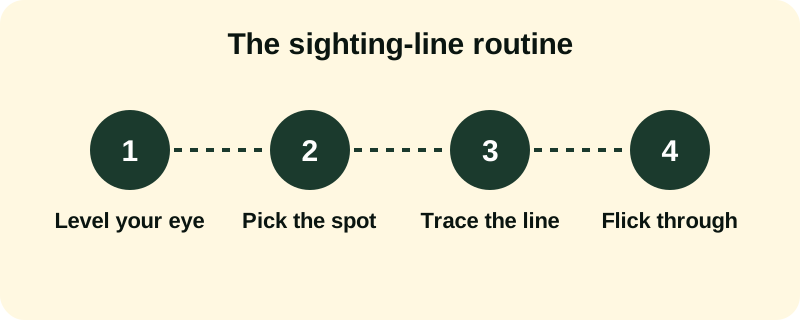
- Crouch or lean until your eye is level with the board surface, not looking down at an angle.
- Pick the exact point on the target coin you need to hit — not just "the coin," but one spot on its edge.
- Trace an imaginary line from that point back through where your striker needs to sit.
- Settle the striker on that line, then check it from eye level one more time before you commit.
- Flick through the line in one smooth motion — don't stop short, steer mid-flick, or jab at it.
That last step matters more than people think. A hesitant flick changes the angle at the exact moment you can't afford it to, which is why a confident, repeated motion beats a careful-looking one that stalls halfway through.
How should you hold the striker for a consistent aim?
Your grip and stance decide whether the same sighting line produces the same result every time. A relaxed, repeatable hand position matters more than how hard you can hit — a striker weighing 15 grams barely needs force, just a clean, confident flick along the line you've already picked.
Keep your base hand still while you flick. If the hand anchoring your position shifts even slightly during the shot, the whole line you worked out moves with it, and the miss has nothing to do with your actual aim — it just looks that way. Choosing a striker that genuinely suits your hand also helps more than most players expect; carrom striker weight and size walks through what to look for if your current one feels inconsistent.
What mistakes wreck an otherwise good aim?
Most aiming errors aren't about bad eyesight or bad luck — they're the same few habits repeating themselves shot after shot.
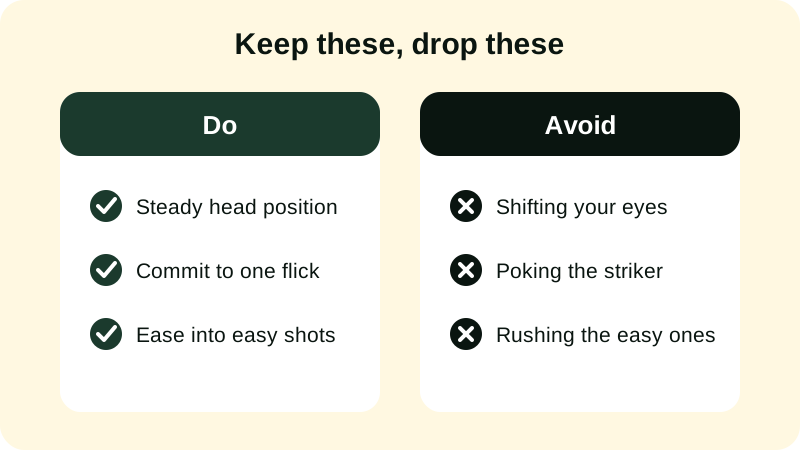
The biggest one is checking the sighting line from one angle and then shooting from a slightly different one — your head drifts between the look and the flick, and the line moves with it without you noticing. The second is rushing a shot before the line actually feels locked in, which is especially tempting when a coin looks easy and close.
Does the board surface itself affect your aim?
It does, more than most players admit. A sighting line is only as reliable as the surface the coin travels across — uneven drag, leftover powder clumps, or a patchy coat will curve a shot that was lined up correctly, and it's easy to mistake that for a bad aim rather than a bad surface.
Keep the board itself part of your aiming routine, not a separate chore. A quick check before a serious game, and a proper clean on a regular schedule, keeps the surface behaving the same way in every corner, which is exactly what a consistent sighting line depends on. The carrom board maintenance guide covers the basics, and if your board plays sluggish no matter what you try, carrom powder alternatives at home is worth a look before you blame your technique.
How can you practice aiming between real games?
Short, repetitive drills beat long matches for building aim, because a drill lets you shoot the same line ten times in a row and actually notice the pattern in your misses.
Start with one coin at a comfortable distance and don't move it until you're pocketing it from the same spot consistently. Once straight shots are automatic, add a single angled target, then a rebound off the side rail — in that order, not all at once. The board's own arrow lines are worth studying too, since they're printed as aiming references rather than decoration. How to practice carrom alone has a full solo drill routine if you don't have a partner around.
None of this requires talent you don't already have. Build the sighting line, protect it with a still base hand and a clean board, and the pots that used to feel lucky start feeling routine. More carrom technique guides are on the blog if you want to keep building from here.
Frequently asked questions
What's the fastest way to improve carrom aiming accuracy?
Drill straight shots at a comfortable distance until you pocket them consistently from the same spot, then add one angled shot before trying rebounds. Repetition on an easy shot builds the sighting-line habit faster than jumping straight into hard positions.
Does striker weight affect how accurately you can aim?
Yes, though less than most beginners assume. A striker weighing 15 grams needs only a clean, confident flick, not force, so a grip that feels natural in your hand matters more for consistent aim than raw power behind the shot.
Why does a shot I aimed correctly still miss the pocket?
Usually it's your head shifting slightly between checking the line and flicking, or an uneven board surface dragging the coin off course. Rule out a sluggish or patchy playing surface before assuming your aim itself was wrong.
Should beginners practice aiming at the queen or at regular coins first?
Regular coins first. The queen sits in a contested spot and tempts rushed shots, so build your sighting-line habit on ordinary straight shots before testing it on a cover shot for the queen.
Is it better to aim slowly or shoot quickly in carrom?
Aim slowly, shoot quickly. Take the time you need to check your sighting line from eye level, but once you commit, flick through in one smooth motion — hesitating mid-flick is what actually ruins accuracy.