Home › Blog › Classic Board Games to Play Indoors (and How to Pick)
Classic Board Games to Play Indoors (and How to Pick)
Last updated: October 19, 2026
A practical guide to picking classic board games to play indoors — carrom, chess, checkers, dominoes, and cards — and running a mixed-age game night that actually works.
Published · Updated
Quick answer
The best classic board games to play indoors set up fast and work for mixed groups: carrom, chess, checkers, dominoes, and card games all qualify. Carrom is usually the easiest pick since the goal is obvious within one round.
Key takeaways
- Pick one fast, physical game and one slow, strategic game so no one waits around
- Carrom works for two players or four in teams, making it flexible for groups
- Clean boards and complete piece sets prevent most mid-game frustration
- A loose rotation keeps a long chess match from eating the whole evening
- Carrom the app is planned but not released yet — cosmetics only in online multiplayer
If you're hunting for classic board games to play indoors that actually survive repeat play, look for ones that set up fast, teach themselves within a round or two, and still reward getting better over time.
What makes a classic board game great for indoor play?
The best indoor game night ideas share a few traits: they don't demand much space, they're forgiving enough for a beginner to join mid-evening, and they still have real depth once you've played a dozen times. A game that needs a huge table or a long rulebook tends to get played once and shelved; the true classics survive precisely because none of that applies to them.
None of these games need much equipment either, which is a big part of why they've lasted as staples of classic tabletop games at home. A board, a set of pieces, and a flat surface are enough — no outlets, no screens, and nothing that stops working if the internet drops.
Which classic games are best for a family game night?
For a mixed group of ages and skill levels, aim for at least one fast, physical game and one slower, strategic game running at the same time, so nobody's stuck waiting through a match that isn't for them.
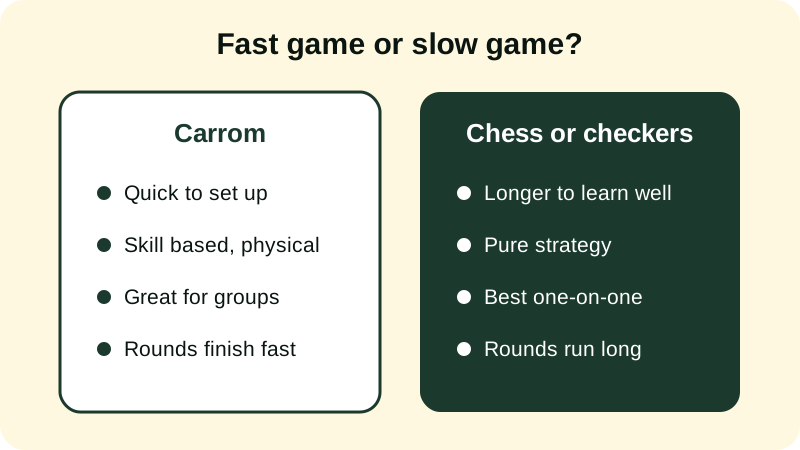
Carrom is usually the easiest sell to kids and reluctant adults alike, because the goal — pocket your coins, avoid fouls, cover the queen — is obvious after one quick demonstration. If younger kids are joining, start them on short, straight shots before anything involving the queen; our guide to teaching kids to play carrom has a simple progression that keeps them engaged instead of frustrated.
| Game | Best group size | Pace |
|---|---|---|
| Carrom | Two players, or four in teams | Fast, physical |
| Chess | Two | Slow, deeply strategic |
| Checkers | Two | Quicker than chess, still strategic |
| Dominoes | Small groups | Fast, easy to learn |
| Card games | Flexible | Varies by game |
Chess and checkers work well as a parallel table for the two people who actually want a slow, quiet battle, while everyone else rotates through carrom or cards. If you've got four confident players, carrom doubles turns the whole thing into a team sport — carrom doubles rules are worth reading before you split into pairs, since partner communication matters more than most people expect.
How do you set up a proper indoor game night?
Good family board games indoors are mostly about preparation, not luck: pick your games before people arrive, clear a stable surface for each one, and have pieces counted and ready so nobody spends the first ten minutes hunting for a missing coin or a stray pawn.
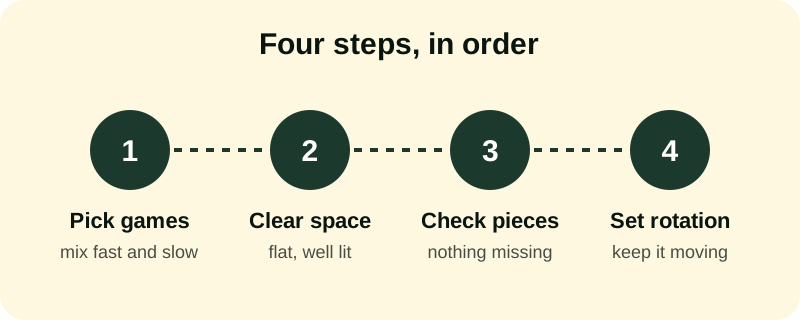
- Pick two or three games that cover different paces — one fast, one strategic, one easy for new players.
- Clear a flat, well-lit surface for each board, away from drinks and foot traffic.
- Check pieces and coins are complete and the playing surface is clean before anyone sits down.
- Set a loose rotation so no single game monopolizes the whole evening.
That last step matters more than it sounds. A single long chess game can quietly eat an entire night if nobody agrees on a rotation in advance, while a string of quick carrom rounds keeps the energy up between slower games and gives newer players a reason to come back to the table.
How do you keep a carrom board — and your other games — playing well?
Pieces and boards both degrade with use, and carrom is especially sensitive to it: a surface that's picked up dust or finger oil plays noticeably slower than a clean one, which throws off every shot you try to line up. A quick wipe before and after a session goes a long way toward keeping that from happening.
The same logic applies to everything else on the table: dominoes with chipped edges tip unpredictably, and a deck of cards gets slippery once it's a few years old. None of it is complicated to maintain, but it's easy to ignore until a shot or a shuffle goes wrong for no obvious reason.
Which classic game should you start with tonight?
If you only have time to set up one thing, carrom is the safest bet for a rainy day or a mixed group: it's quick to explain, genuinely competitive, and interesting enough that the same people will want a rematch next week. Our full rules and setup guide walks through the board, the coins, and the queen if you've never played before or just need a refresher before guests arrive.
Carrom, the mobile version of the same game, isn't released yet, but it's being planned around real physics, local and online multiplayer, and a promise of no pay-to-win in online multiplayer, where boards and strikers stay purely cosmetic in competitive play. If you'd like a way to practice between real game nights once it's out, you can get notified when it launches.
Whatever you set up tonight — carrom, chess, dominoes, or a deck of cards — the formula for a good indoor game night rarely changes: clean equipment, a sensible mix of fast and slow games, and a group willing to rotate so everyone actually gets to play. The rest of the blog has deeper guides on technique and setup if carrom becomes the one that sticks.
Frequently asked questions
What classic board games work best for indoor family game nights?
Carrom, chess, checkers, dominoes, and a deck of cards cover most groups. Carrom and dominoes are fast and social, chess and checkers reward patient strategy, and cards flex to almost any group size — running one fast and one slow option together keeps everyone engaged.
How do I keep a mixed-age group entertained with classic games?
Run at least two tables at once: a fast, physical game like carrom for kids and casual players, and a slower strategy game like chess for anyone who wants a longer match. Rotate players between them so nobody is stuck waiting through a game that isn't for them.
How often should I clean a carrom board during a long game night?
A quick wipe before guests arrive and again if coins start dragging mid-evening is usually enough. A dirty or sticky surface slows shots unpredictably, which is frustrating for new players trying to judge how hard to flick.
Is the Carrom mobile app available to play right now?
Not yet — Carrom is still in development. It's being planned with real physics, local and online multiplayer, and no pay-to-win in online multiplayer, where strikers and boards stay cosmetic. You can get notified the moment it launches from the home page.
Can four people play carrom at once?
Yes — carrom is played by two players or by four players split into two teams, which makes it one of the easier classic games to scale up for a bigger group without slowing the pace down much.