Home › Blog › Teaching Kids to Play Carrom: A Starter Guide
Teaching Kids to Play Carrom: A Starter Guide
Last updated: October 16, 2026
A practical guide to teaching kids carrom by starting with one shot, simplifying the rules, and keeping games short and encouraging.
Published · Updated
Quick answer
Teaching kids to play carrom works best when you start with one simple straight shot, add turns and the queen gradually, and keep early games short. Most kids pick it up fast once they feel a clean strike land.
Key takeaways
- Start with one straight shot before adding turns, colors, or the queen
- Keep early games short so losing doesn't sting and kids want another round
- Teach only what changes the next shot: turn order, their color, and misses
- Praise clean technique over hard flicks to build real control early
- Move to doubles as a parent-and-child team once the basics feel automatic
Teaching kids to play carrom works best when you start with one shot, one color, and one short game instead of handing over the full rulebook on day one. Keep the first few sessions short and genuinely fun, and the rest of the game tends to follow naturally from there.
What's the best way to start teaching kids to play carrom?
Start with the single easiest shot in the game: a short, straight flick at one coin sitting right in front of a pocket. Don't worry yet about turns, scoring, or the queen — just let a child feel what a clean, controlled strike feels like, and celebrate it every time the coin drops.
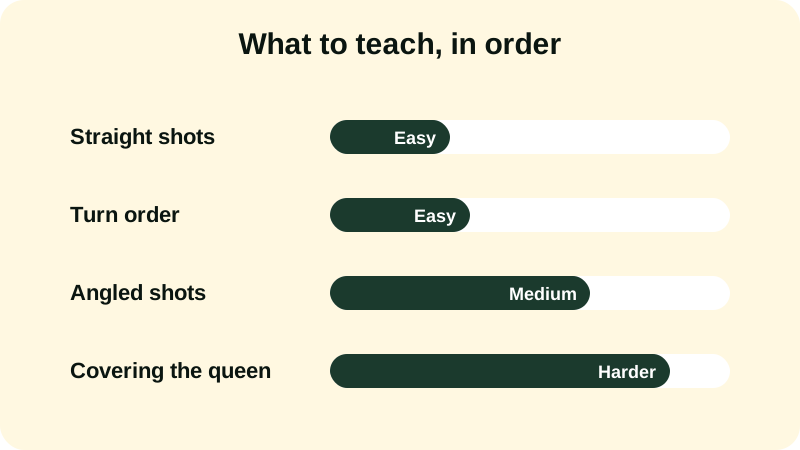
Once a child can land a few of those straight shots in a row, add one more piece at a time: their own color, then taking turns, then a simple game that ends when one side clears their coins. Carrom is normally played by two players, or by four players in two teams, so you can scale the group up once the basics are solid — a parent-and-kid team against another pair is often more fun than head-to-head for a first real game.
- Let the child flick the striker freely a few times just to get a feel for pressure and direction, with no coins on the board yet.
- Set up a single coin near a pocket and practice only that shot until it lands consistently.
- Add their full set of coins and let them try pocketing a few in open play, without worrying about turns.
- Introduce turn order and a real opponent, starting with short games so nobody loses interest halfway through.
- Bring in the queen and covering it only once pocketing their own color feels automatic.
How do you simplify carrom rules for young kids?
Drop everything except what changes the next shot. A kid doesn't need to know every foul on day one — they need to know whose turn it is, which coins are theirs, and what happens if the striker misses everything.
A full board has nine coins of one color, nine of the other, and a single red queen in the middle for both sides to chase — that's plenty to track already, so resist explaining the queen's cover rule until straight pocketing is reliable. If you want the exact setup and full rule rundown to lean on while you teach, this guide to how to play carrom covers the basics in one place, and this coin placement diagram is handy for showing a kid exactly where everything goes before the first shot.
Keep early games short on purpose. A game that ends in a few minutes, with a clear winner and a quick reset, holds a kid's attention far better than one long, grinding match — you can always play another round.
What drills and games help kids improve fast?
Short, repetitive drills beat long unstructured games for building real skill. Set up the same simple shot five or six times in a row and let a child repeat it until it's boring — that boredom is exactly when the technique starts becoming automatic instead of lucky.
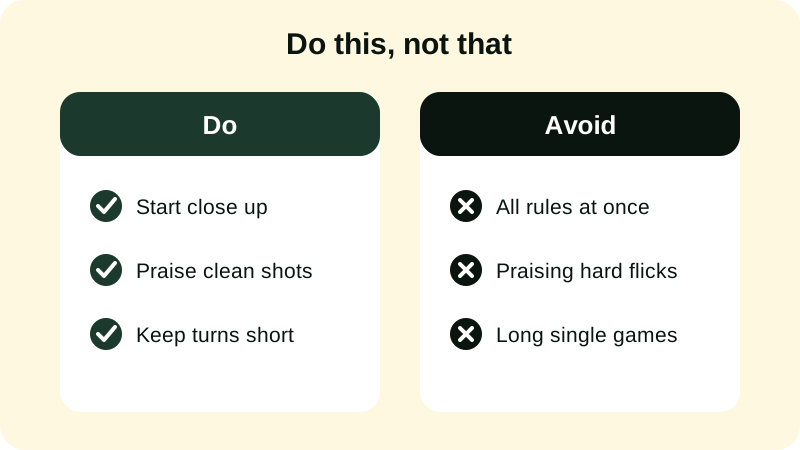
A good first drill: line up one coin a short, comfortable distance from a pocket and have the child shoot it ten times, counting how many go in. Move the coin slightly further or to a gentle angle only once they're landing most of them. This guide to aiming accurately is worth reading yourself before you teach, since explaining a sighting line in plain words helps a lot more than just saying "aim better."
For slightly older kids who already have the basics, solo practice keeps them improving between family games. This solo training guide has drills a kid can run on their own, which also means they get more reps than waiting for a parent to free up the board.
How do you keep kids motivated during a carrom game?
Keep score low-pressure and keep games short enough that losing one doesn't sting for long. A child who loses a two-minute game is usually fine to play again immediately; a child who loses a long, grinding one often isn't.
Let kids make real mistakes without constant correction. Pointing out every single error turns practice into criticism, and a child who feels judged on every shot stops wanting to play. This rundown of common carrom mistakes is a useful reference for you to skim beforehand, so you can spot the one or two habits actually worth correcting instead of commenting on everything at once.
Once a kid has the basics down, playing doubles as a parent-and-child team against another pair is a great next step — this guide to doubles rules walks through how teams work.
For more technique and setup guides to work through together, the rest of the blog covers everything from striker technique to board care.
Frequently asked questions
What age can a kid start learning carrom?
There's no strict minimum — if a child can hold and flick a striker with some control, they can start. Younger kids usually need bigger, simpler targets and shorter sessions, while older kids can move through the basics faster and handle turn order and the queen sooner.
Should I teach the queen rule right away?
No. Let a child get comfortable pocketing their own coins consistently before introducing the queen and the idea of covering it. Rushing the queen rule early usually just confuses a beginner who hasn't mastered a basic straight shot yet, and it can make the game feel more complicated than fun.
How long should a kid's first carrom game last?
Keep it short — a few minutes is plenty. A quick game with a clear winner holds a child's attention far better than one long match, and it's easy to just reset the board and play another round if they're still having fun.
Is carrom good for teaching kids focus and fine motor skills?
Yes. Lining up a shot, controlling how hard to flick, and watching where the striker ends up all build hand-eye coordination and patience. Because turns are short and outcomes are immediate, carrom gives kids quick feedback, which tends to hold their attention better than slower games.
What's the biggest mistake parents make teaching carrom to kids?
Explaining every rule before the first shot. Kids learn turn order, colors, and the queen far faster by playing a simplified version first and adding one rule at a time, rather than sitting through a full rulebook explanation before they've even touched the striker.